Loss of Firmness & Elasticity
What Is Loss of Firmness & Elasticity?
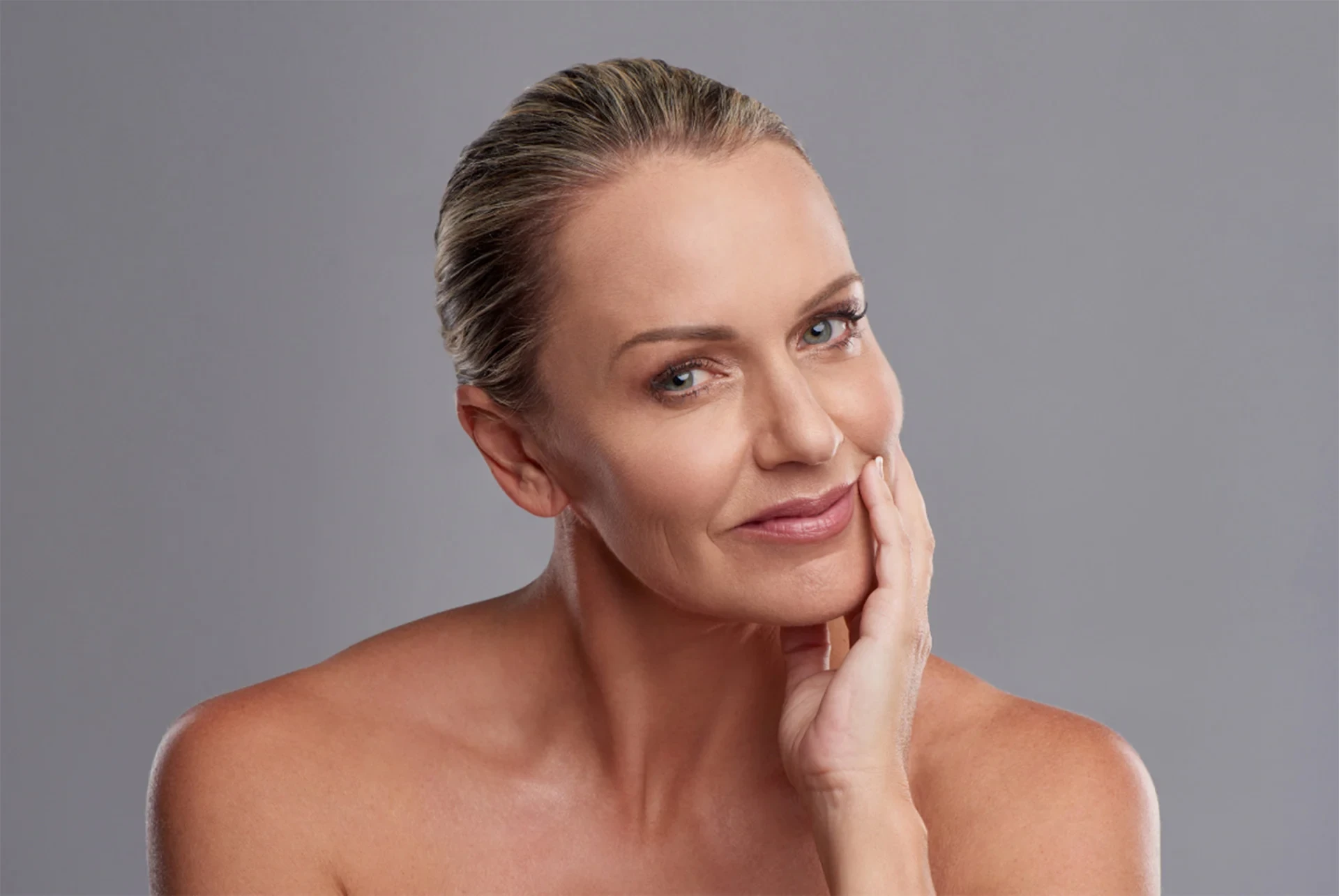
- Loss of firmness and elasticity describes skin that feels less supported, appears looser or does not bounce back as readily as it once did. You may notice softer facial contours, early jowling, fine creases or a thinner, crepey texture around the cheeks, jawline and neck.
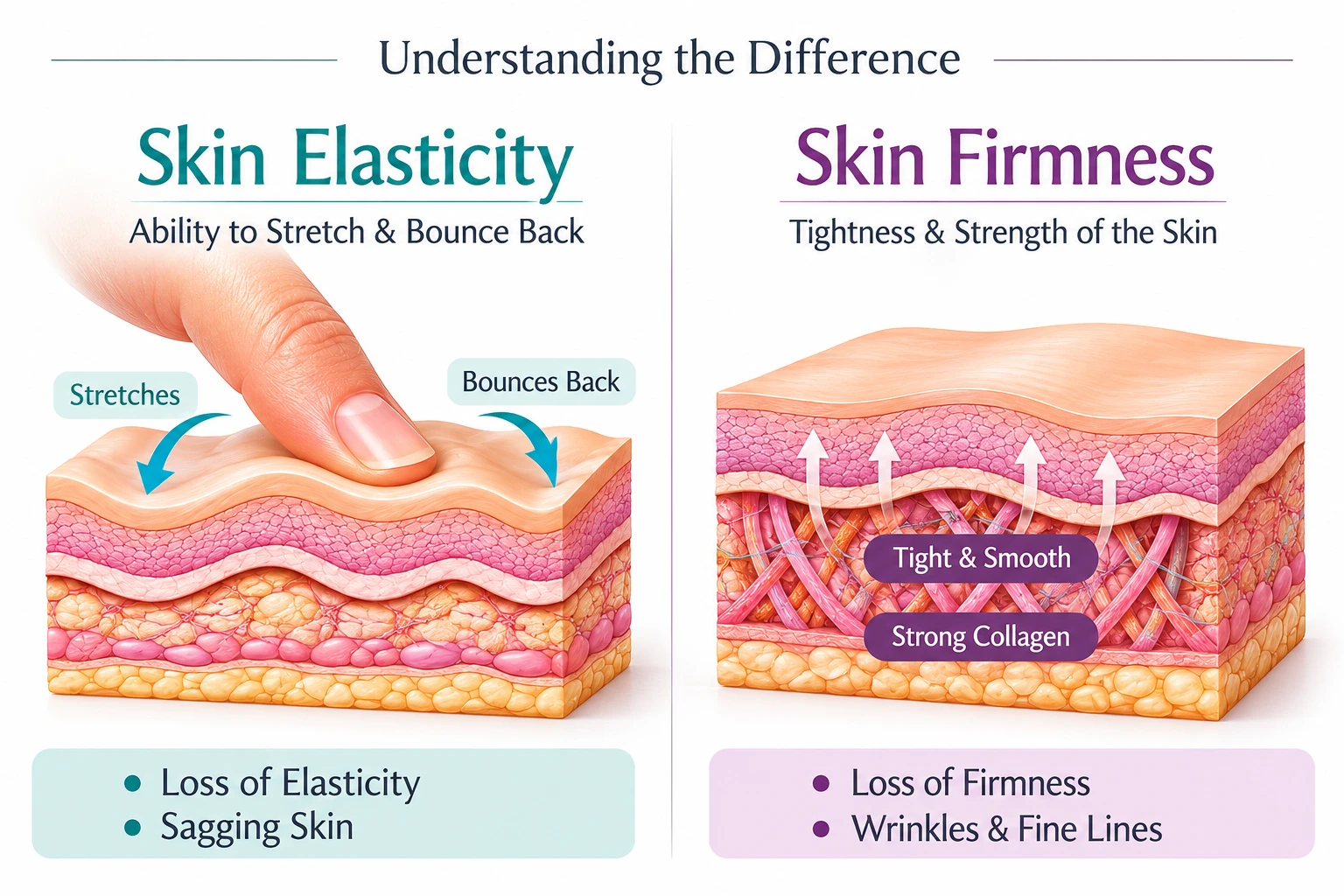
- Firmness and elasticity are related but different. Firmness refers to the skin’s structural support, while elasticity is its ability to stretch and return to shape. Collagen provides strength and support, while elastin helps maintain flexibility and resilience.
- Skin loses firmness and elasticity as the supporting network within the dermis gradually changes. Collagen provides strength and structure, while elastin allows the skin to stretch and return to shape. With age, fibroblasts - the cells that maintain this network - become less active, collagen production slows, and existing fibres become fragmented and less organised. Sun exposure accelerates this process by generating oxidative stress and activating enzymes that break down collagen, while also damaging the elastic fibre network. Glycation, a process in which sugars bind to structural proteins, can make collagen stiffer and less flexible. Hormonal changes, particularly declining oestrogen around menopause, further affect collagen content, skin thickness and hydration. Meanwhile, changes in facial fat, supporting ligaments and bone structure reduce the foundation beneath the skin. Together, these processes contribute to reduced resilience, crepey texture, softer facial contours and visible sagging.
- At DW Aesthetic Clinic, treatment options may include XERF RF Tightening, Potenza RF Microneedling, Ultherapy PRIME and consultations for collagen biostimulator or polynucleotide treatments. The appropriate approach depends on whether your main concern is skin quality, superficial looseness, deeper tissue descent or a combination of these changes.
How It Can Appear
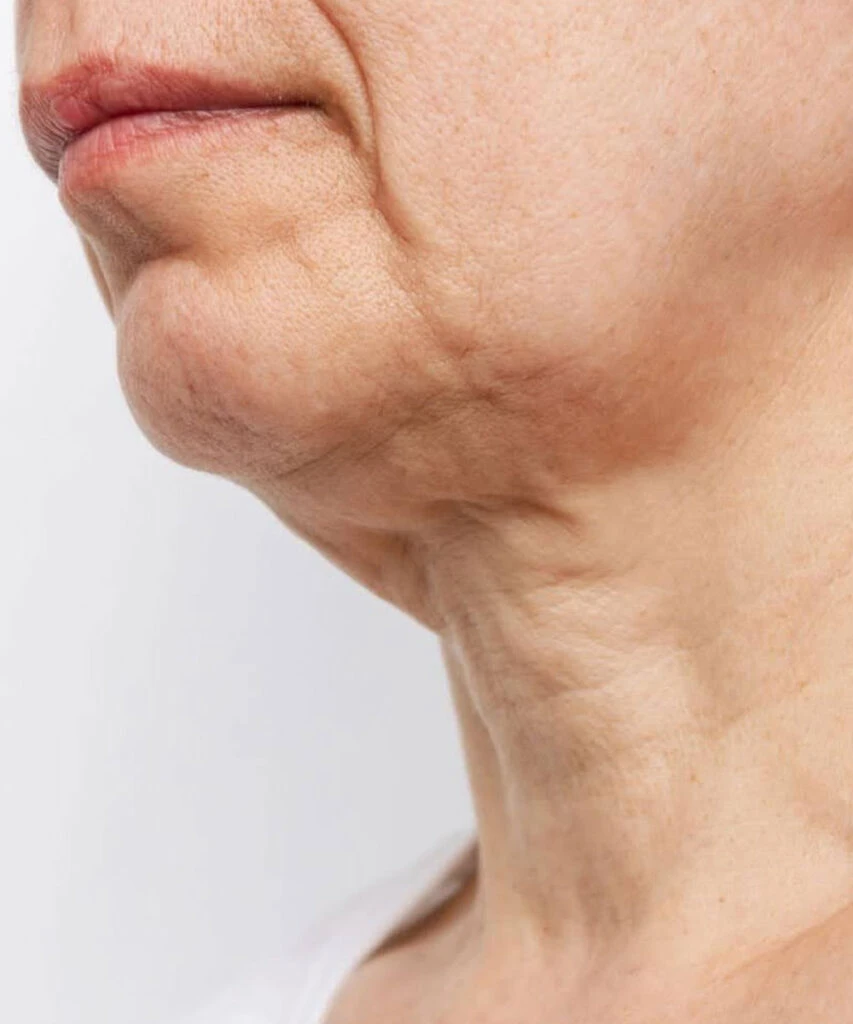
- Loss of firmness and elasticity may present as:
- • Skin that feels softer or less resilient
- • Early jowling and reduced jawline definition
- • Loose skin beneath the chin or around the neck
- • Fine creases and crepey skin texture
- • Reduced cheek firmness
- • Skin that appears thinner or less supple
- Changes in facial volume and deeper tissue support may also contribute to a sagging appearance. These require assessment because skin tightening alone may not address every concern.
Why Choose DW Aesthetic Clinic?
- At DW Aesthetic Clinic, we assess skin quality alongside facial structure, volume distribution and the pattern of tissue descent.
- Our personalised approach combines clinical assessment with Korean aesthetic principles, with a focus on natural-looking refinement. Treatment planning considers your skin thickness, degree of laxity, medical history, recovery preferences and goals.

Who Is Affected?
Loss of firmness and elasticity can affect adults of different ages and skin types. Changes may develop gradually with ageing or become more noticeable following significant weight loss, hormonal changes or prolonged sun exposure. Some people notice early changes in skin texture and resilience, while others develop more visible looseness around the lower face and neck.
When to Seek Treatment
A consultation may be helpful when changes in skin firmness, facial contours or elasticity persist despite a consistent skincare routine. Non-surgical treatments may improve mild to moderate laxity and skin quality. More pronounced sagging or excess skin may require a different approach. An assessment helps establish what treatment can realistically achieve.
What Causes Loss of Firmness & Elasticity?
Changes in Collagen
With age, collagen production slows and existing collagen becomes more fragmented. The skin gradually loses some of its strength and structural support, contributing to fine lines and looseness.
Changes in Elastin
Elastin fibres allow the skin to stretch and recoil. Ageing and accumulated sun damage can affect this elastic network, reducing the skin’s ability to return to its original shape.
Sun Exposure
Repeated ultraviolet exposure contributes to the breakdown of collagen and changes in elastin. Over time, this can lead to wrinkles, roughness and reduced skin resilience.
Hormonal Changes
Hormonal changes, particularly around menopause, can affect skin thickness, hydration and collagen content. These changes may make skin feel drier, thinner and less firm.
Weight Changes
Significant weight loss, including weight loss associated with GLP-1 medications, can reduce the underlying fat that supports facial contours. If the skin does not fully adapt to this volume change, hollowing, looseness and jowling may become more noticeable. Repeated weight fluctuations may also affect facial fullness and definition. Ageing affects the tissues beneath the skin as well as the skin itself. Changes in fat distribution, ligaments and bone support can contribute to cheek flattening, jowling and reduced jawline definition.
Genetics and Lifestyle
Genetics influence how and when skin changes develop. Smoking, accumulated environmental exposure and other lifestyle factors can also contribute to premature skin ageing.
What Can Help Maintain Skin Firmness?
Avoid smoking and aim for a stable weight.
Exercise regularly, including resistance training to support muscle strength and body composition.
Support general health through balanced nutrition, regular activity and adequate sleep.
Note: Skincare can improve hydration and surface quality, although it has limited ability to lift established sagging.
Treatment Options for Loss of Firmness & Elasticity

XERF RF Tightening
A radiofrequency treatment designed to stimulate collagen production, improve skin firmness, and enhance facial contours by gently heating the deeper layers of the skin.

Collagen Biostimulator Consultation
An advanced injectable treatment designed to support skin rejuvenation and improve overall skin quality over time.

HIFU Ultherapy Lifting
A non-invasive ultrasound treatment that lifts and tightens skin by stimulating collagen production deep beneath the surface.
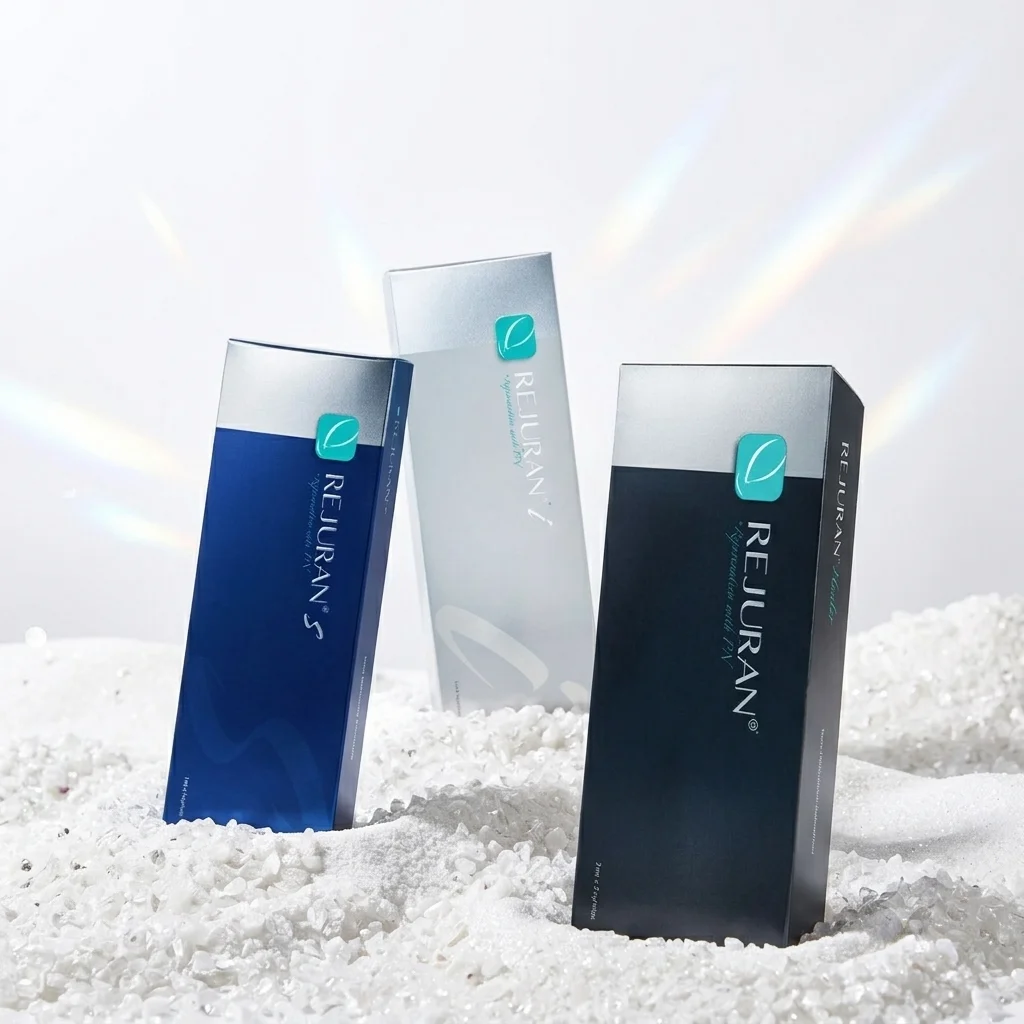
Rejuran
A skin healing treatment using polynucleotides (PDRN) to regenerate damaged tissue, stimulate repair, and restore youthful skin quality.
Frequently Asked Questions
Which treatment is right for me?
The most appropriate treatment depends on the cause and degree of your concerns. Reduced skin firmness, deeper tissue descent and facial volume loss can look similar but may require different approaches. Your consultation helps identify these factors and guide treatment selection.
What is the difference between lifting and tightening?
Tightening generally focuses on improving skin firmness and reducing looseness. Lifting aims to improve the position or appearance of descended tissue. Some treatments can address both to varying degrees, but the outcome depends on your anatomy and the degree of laxity.
Can I combine treatments?
A combination may be considered when concerns involve different tissue layers or include both laxity and changes in skin quality. Treatments may be staged, with timing determined by the procedures involved and your recovery.
How soon will I see results?
Collagen remodelling develops gradually. Depending on the treatment, improvement may become noticeable over several weeks to months. Early changes in hydration or swelling should not be confused with the final result.
Are there risks or downtime?
All treatments carry potential risks. Temporary redness, swelling, tenderness or bruising may occur, depending on the procedure. RF microneedling can also cause pinpoint bleeding, dryness or crusting. Less common complications vary by treatment and will be discussed during consultation.
Can these treatments replace a facelift?
Non-surgical treatments may improve mild to moderate laxity, but they do not reproduce the results of surgery. Significant excess skin or advanced tissue descent may require surgical assessment.
How can I maintain my results?
Daily sun protection, consistent skincare, avoiding smoking and maintaining a stable weight can help support skin health. Follow-up assessments allow your treatment plan to be adjusted as your skin changes. All treatments carry potential risks. Results and downtime vary depending on individual factors. A personalised consultation is required to assess suitability and determine an appropriate treatment plan.
Book a consultation
A one on one consultation to personalise a series of treatments tailored for your needs and concerns. You will be able to learn everything about your skin condition.
Book Now
Specialising in advanced Korean skincare protocols, offering personalised treatment plans designed to enhance your natural beauty with care and precision.
Consult Aesthetic Nurse Vivian ChoeFind Us
Address
Level 4, Sunnybank Hills Shopping Town, 661 Compton Road, Sunnybank Hills QLD 4109, Brisbane
Phone
0494561653Hours